

SecureBioAI
Security and Safety of AI in Biotechnology
Securing AI-enabled biotechnology systems
SecureBioAI 2026: Security and Safety of AI in Biotechnology is the inaugural workshop co-located with the Annual Computer Security Applications Conference (ACSAC 2026). The workshop aims to bring together researchers, practitioners, industry experts, and policymakers to address emerging security and safety challenges arising from the integration of artificial intelligence into biotechnology, healthcare, pharmaceutical research, synthetic biology, and biomedical engineering.
Build a trusted interdisciplinary community
SecureBioAI brings together researchers, practitioners, policymakers, and educators working across cybersecurity, AI security, biotechnology, bioinformatics, healthcare security, and cyberbiosecurity to discuss technical, operational, and governance approaches for mitigating AI-related biological risks.
Call for Papers
Recent advances in large language models (LLMs), biological foundation models, and generative AI are transforming biomedical discovery, laboratory automation, protein engineering, drug discovery, genomic analysis, and clinical decision support. However, these technologies also introduce new cyberbiosecurity risks, including prompt injection attacks, jailbreaks against Bio-LLMs, adversarial machine learning, sensitive biomedical data leakage, AI-enabled insider threats, misuse of biological AI systems, and broader dual-use security concerns. SecureBioAI provides an interdisciplinary forum to discuss innovative research, practical solutions, evaluation methodologies, governance frameworks, and real-world experiences for securing AI-enabled biotechnology systems.
We invite original, unpublished research papers describing novel contributions at the intersection of cybersecurity, trustworthy AI, biotechnology, healthcare, bioinformatics, cyberbiosecurity, and AI governance. We welcome submissions from academia, industry, and government presenting theoretical advances, practical systems, benchmark datasets, empirical studies, deployment experiences, case studies, and emerging research directions. Both offensive and defensive perspectives are encouraged.
Topics of Interest
Topics include, but are not limited to:
- Security and safety of bio-specialized LLMs and foundation models
- Adversarial attacks against biological AI systems
- Prompt injection and jailbreak techniques in Bio-LLMs
- AI-enabled biological threat modeling
- AI safety, robustness, and alignment in biotechnology
- Secure genomic, biomedical, and healthcare data pipelines
- AI red-teaming methodologies for biotechnology systems
- Security of laboratory automation and biomanufacturing systems
- AI governance and dual-use risk mitigation
- Privacy-preserving AI for healthcare and biotechnology
- Secure deployment of AI-enabled healthcare systems
- Cyberbiosecurity education and workforce development
- AI-enabled insider threats in biotechnology environments
- Responsible disclosure and AI safety practices
- Security benchmarking and evaluation for Bio-LLMs
- Public policy, governance, and research security for biotechnology AI
Submission Guidelines
Proceedings
Final IEEE submission instructions and proceedings information will be announced once provided by ACSAC.
AI Usage Policy
Authors must follow the ACSAC AI Usage Policy for all workshop submissions.
Paper Submission Categories
- Regular technical papers: 7–12 pages
- Short technical papers: 2–6 pages
- Poster technical papers: 1–2 pages
- Case study papers: 2–6 pages
All submitted papers must be prepared in US Letter size, not A4, using the double-column IEEE conference format. This requirement will be strictly enforced.
IEEE format templates are available at IEEE Conference Templates.
LaTeX submissions must use the IEEEtran.cls version 1.8b template with the \documentclass[conference,compsoc]{IEEEtran} document class option.
Papers must be non-blinded and must clearly list each author’s organizational affiliation and contact information for one corresponding author. Submissions that do not follow these formatting guidelines risk rejection without consideration of paper merits.
Important Dates
Preliminary Program
Registration, Welcome Coffee, and Networking
Registration, badge pickup, and informal networking among participants.
Welcome Remarks
Opening remarks by the workshop chairs, overview of the workshop objectives, schedule, and logistics.
Keynote Address
Invited keynote speaker (to be announced).
Poster Session & Coffee Break
Poster presentations, coffee break, demonstrations, and networking.
Technical Session I
Peer-reviewed paper presentations. Session topics will be announced after the final program is determined.
Lunch & Networking
Lunch break with opportunities for networking and discussions among attendees.
Technical Session II
Peer-reviewed paper presentations. Session topics will be announced after the paper selection process.
Coffee Break
Refreshments, networking, and discussion.
Technical Session III
Peer-reviewed paper presentations. Session topics will be announced with the final program.
Panel Discussion & Closing Remarks
Open discussion on future directions, community building, audience Q&A, and closing remarks from the workshop organizers.
Note: This schedule is preliminary and subject to change. Keynote speakers, technical session titles, poster presentations, and panel members will be announced after paper acceptance.
Keynote Speakers
Keynote speakers and invited talks will be announced soon.
Workshop Organizers
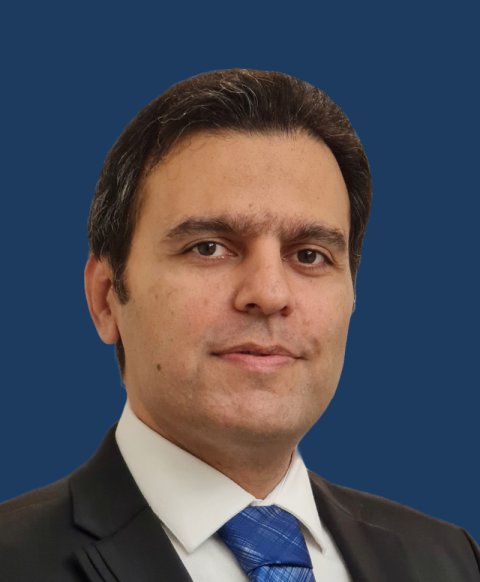
Dr. Mohammad GhasemiGol
General Chair
Associate Professor, Department of Computer Science & School of Cybersecurity, Old Dominion University
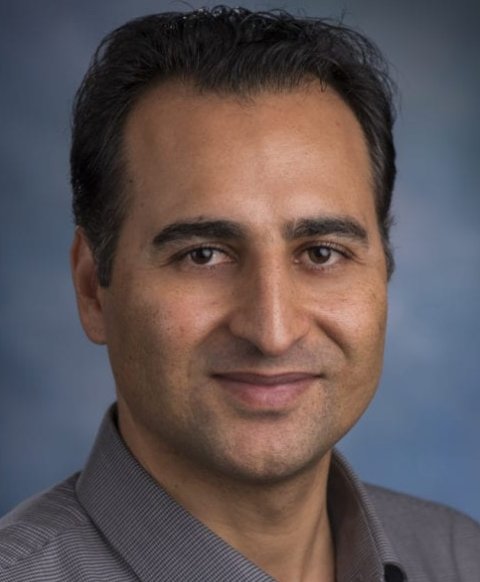
Dr. Daniel Takabi
Vice-Chair
Professor & Director, School of Cybersecurity, Old Dominion University


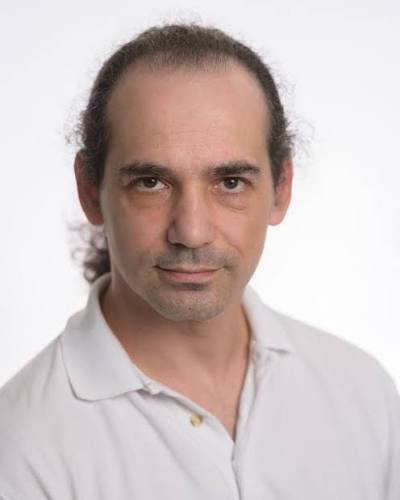
Dr. Rami Puzis
Vice-Chair
Software and Information Systems Engineering Department, Ben-Gurion University of the Negev
Program Committee
The Program Committee is currently being formed and will be announced soon.
Sponsors
Sponsorship opportunities are available. Interested organizations are encouraged to contact the workshop organizers.
Venue & Travel
SecureBioAI 2026 will be co-located with ACSAC 2026 in Los Angeles, California, USA.
Visa Information
International participants requiring a visa are encouraged to begin the process as early as possible. ACSAC provides visa letter information for international attendees.
Contact
For questions about SecureBioAI 2026, please contact the workshop organizers. Please include SecureBioAI in the subject line.